If you’ve ever wondered what actually goes into building a reliable condenser coil … it’s far more precise than most people expect. It’s not just bending metal and welding joints together.
A well-manufactured coil is the result of material decisions, engineering design, machine accuracy, and proper testing. Each step directly affects how long the coil lasts and how efficiently it performs in a real HVAC or refrigeration system.
For replacement coils and major-brand condenser coils especially … the manufacturing process is what separates a coil that lasts a decade from one that fails within two years.
How a Condenser Coil Is Manufactured
Step 1: Design and Material Selection
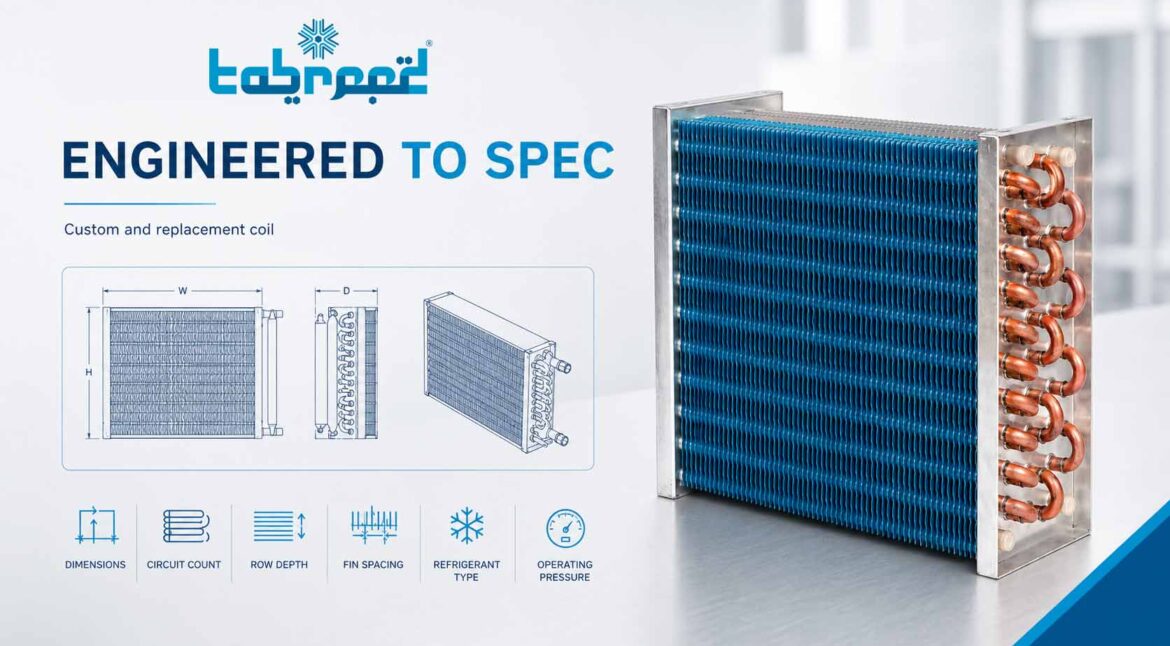
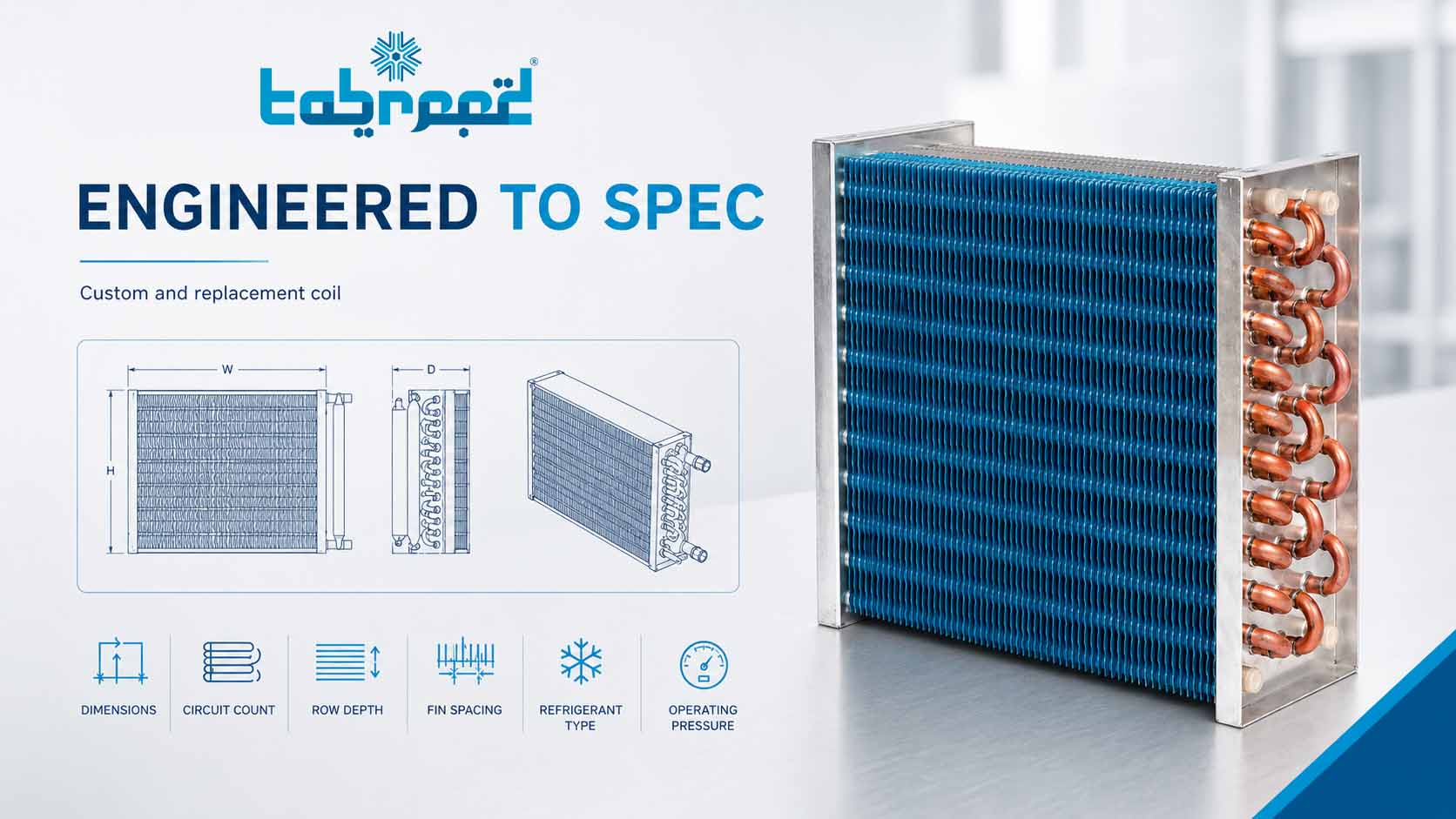
Everything starts with design. Before anything is cut or pressed, the coil is engineered to spec … dimensions, circuit count, row depth, fin spacing, refrigerant type, and operating pressures. For custom work, this stage involves close collaboration with the client. For replacement condenser coils matched to brands like LG, Samsung, Carrier, or York … the design must replicate original specifications precisely.
Once the design is locked, materials are selected. At Al Tabreed, we manufacture coils in two primary material configurations:
Copper tubes with aluminium fins and copper tubes with copper fins.
Both use copper tubing as the refrigerant circuit. The difference is in the fins.
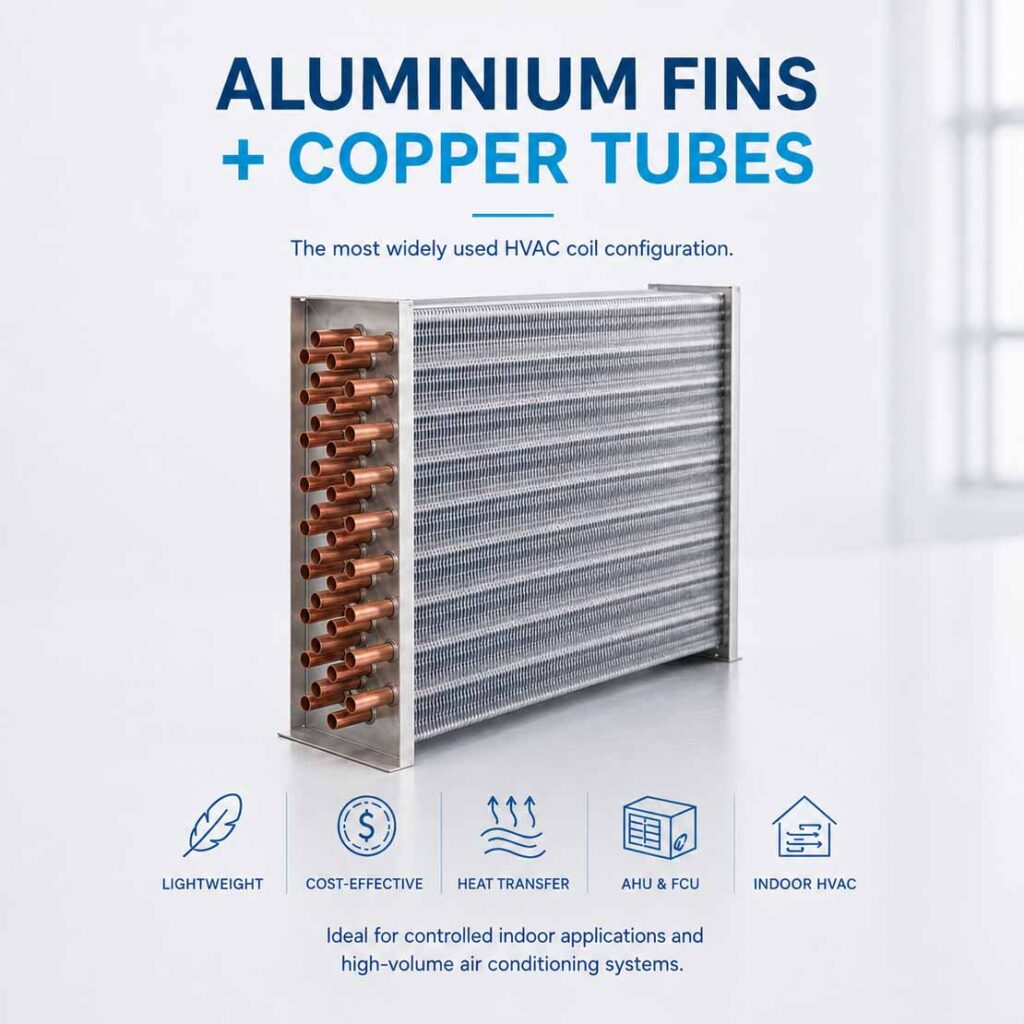
Copper Tubes + Aluminium Fins
This is the most widely used configuration in commercial and residential HVAC systems. Aluminium fins are lightweight, cost-effective, and offer excellent thermal conductivity for most standard applications. They’re well-suited to indoor environments, AHU coils, FCU coils, and general air conditioning systems where ambient conditions are controlled.
The combination delivers strong heat transfer performance at a practical cost point … making it the go-to choice for high-volume applications.
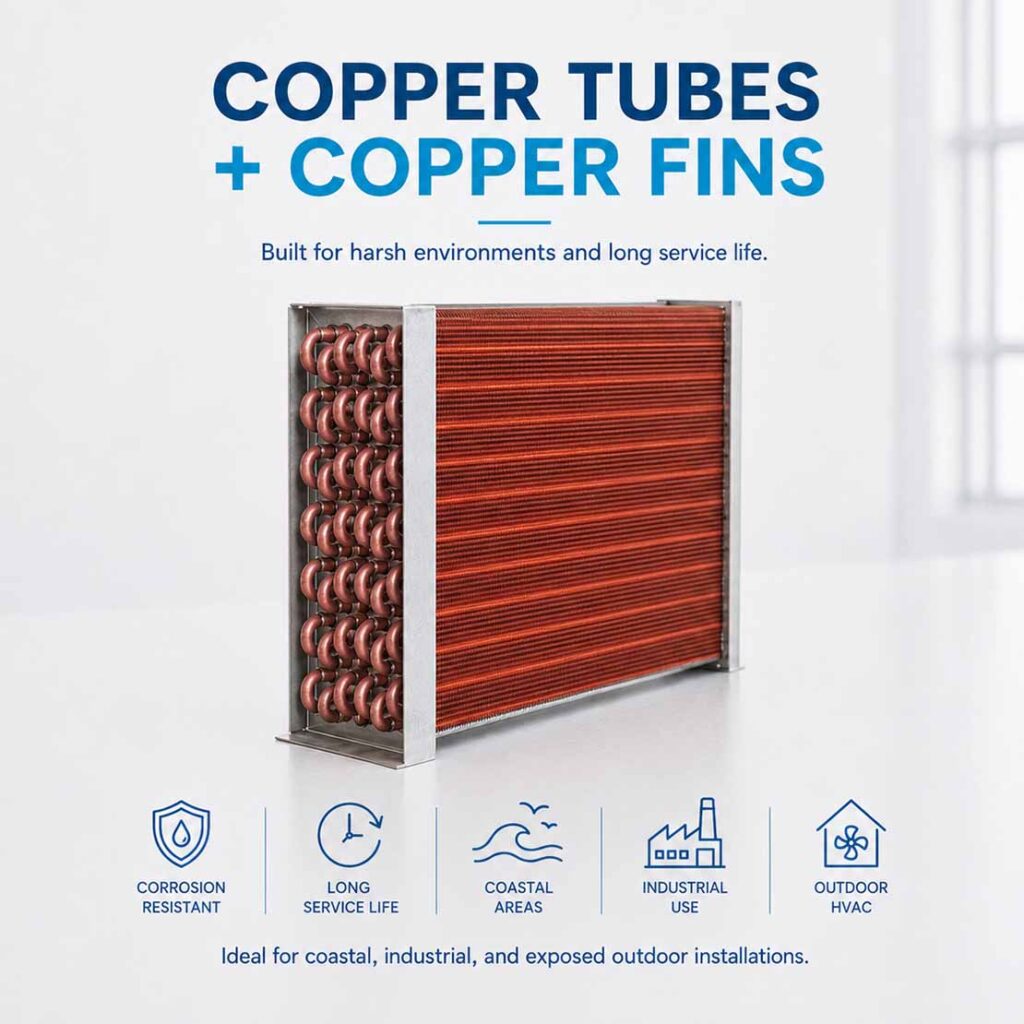
Copper Tubes + Copper Fins
All-copper construction is specified where corrosion resistance and longevity are the priority. Copper fins handle harsh environments significantly better than aluminium – particularly in coastal areas, industrial settings, and outdoor installations where salt air, humidity, and chemical exposure are ongoing concerns.
In the UAE and Gulf region, where condenser units often sit on rooftops or near coastlines, all-copper coils offer a longer service life. The material cost is higher – but the total cost of ownership over the coil’s lifespan is often lower.
Choosing between the two comes down to application environment, budget, and expected service life.
Copper tubes are cut to the required lengths based on the coil design specs. This is precision work … tolerances matter here because every dimension affects how the finished coil fits into the system it’s replacing or being built for.
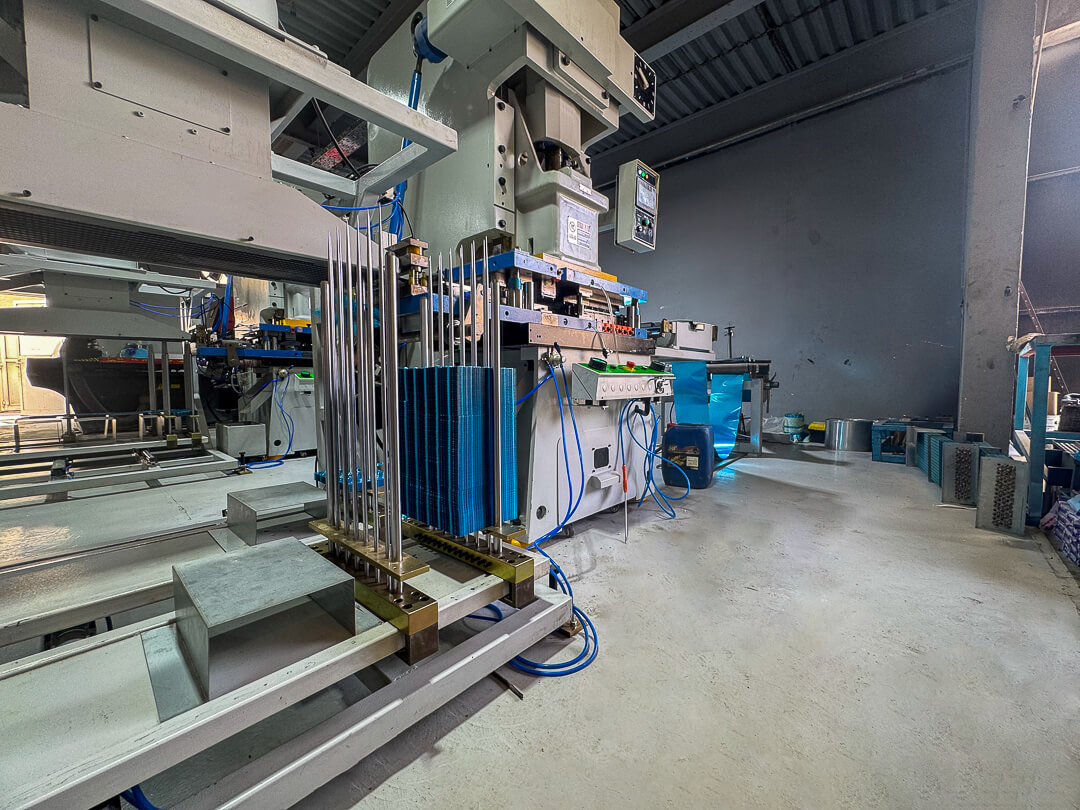
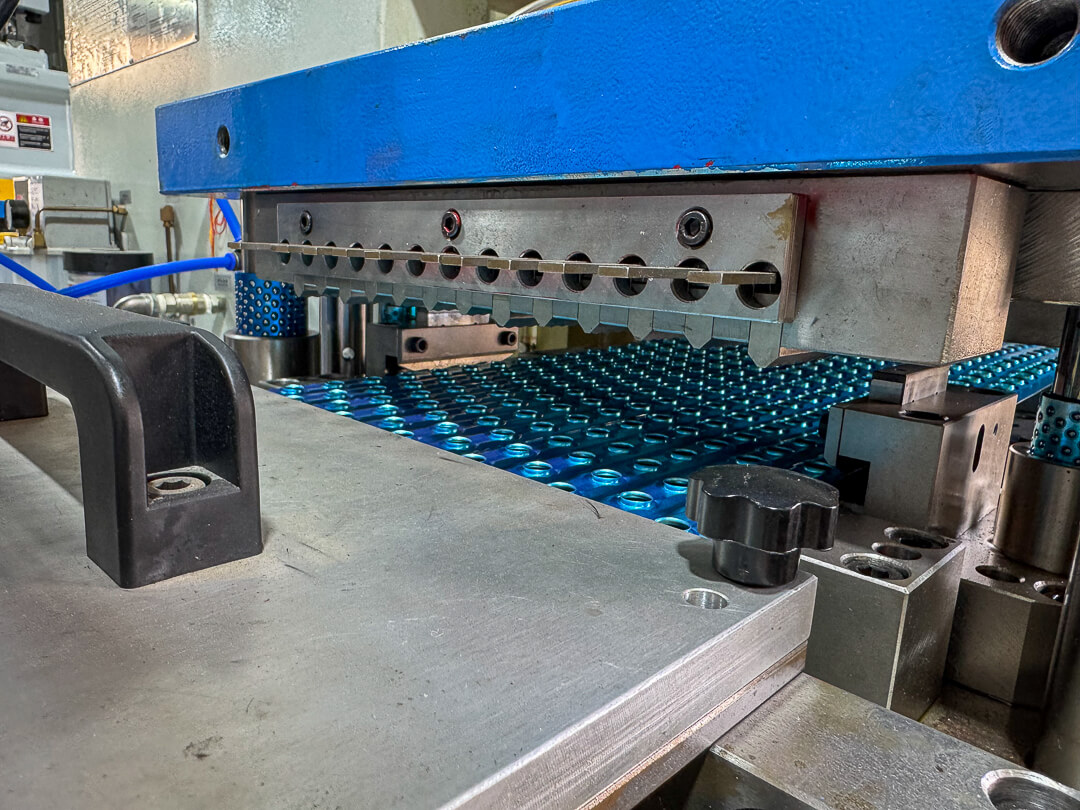
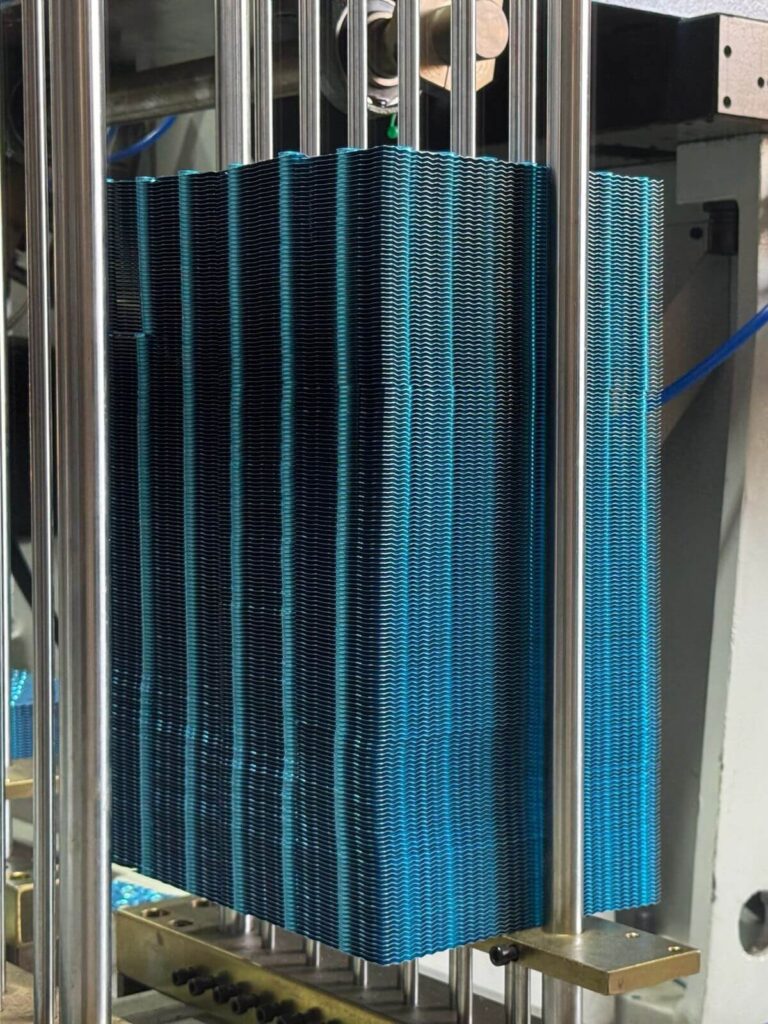
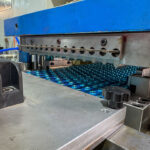
The fins, whether aluminium or copper – are pressed using precision machinery. Fin spacing and corrugation patterns are engineered to balance airflow resistance with heat transfer in HVAC coils.
Tighter spacing increases heat transfer surface area but also increases resistance to airflow. The right balance depends entirely on the application … a residential AC unit, an air handling unit (AHU), or an industrial chiller all have different requirements.
This is also where custom manufacturing starts to look very different from standard off-the-shelf coils. A replacement coil for a specific brand model must match the original fin count, spacing, and geometry exactly.
Step 3: Tube Expansion and Coil Assembly
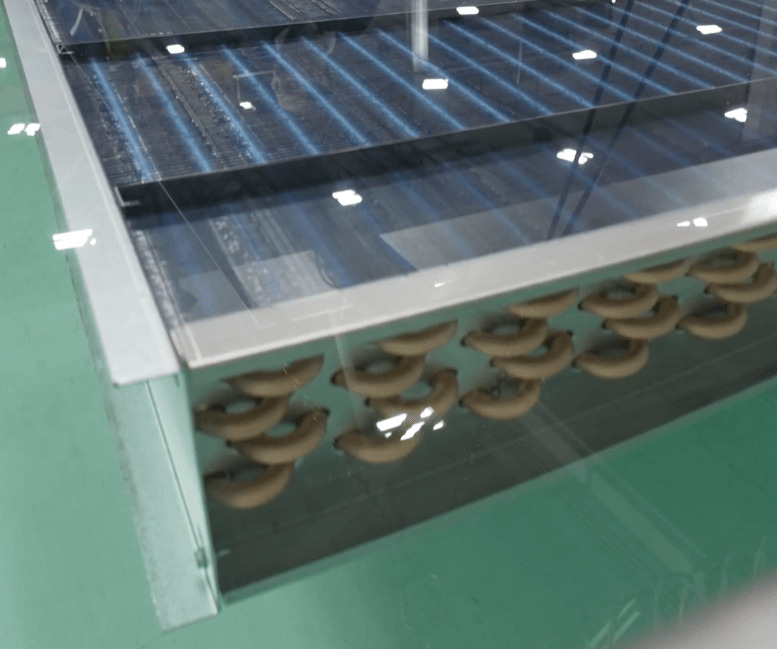
Once fins are stacked onto the tube bundle, a tube expander is pushed through each copper tube. This expands the tube outward, locking it firmly against the fins and creating tight mechanical contact … essential for efficient heat transfer.
Poor mechanical contact between tube and fin is one of the most common causes of underperforming coils. It’s invisible from the outside but shows up in system efficiency readings over time.
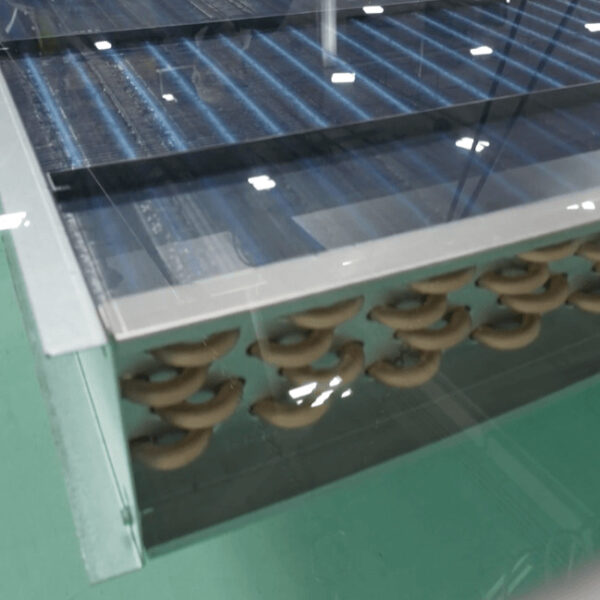
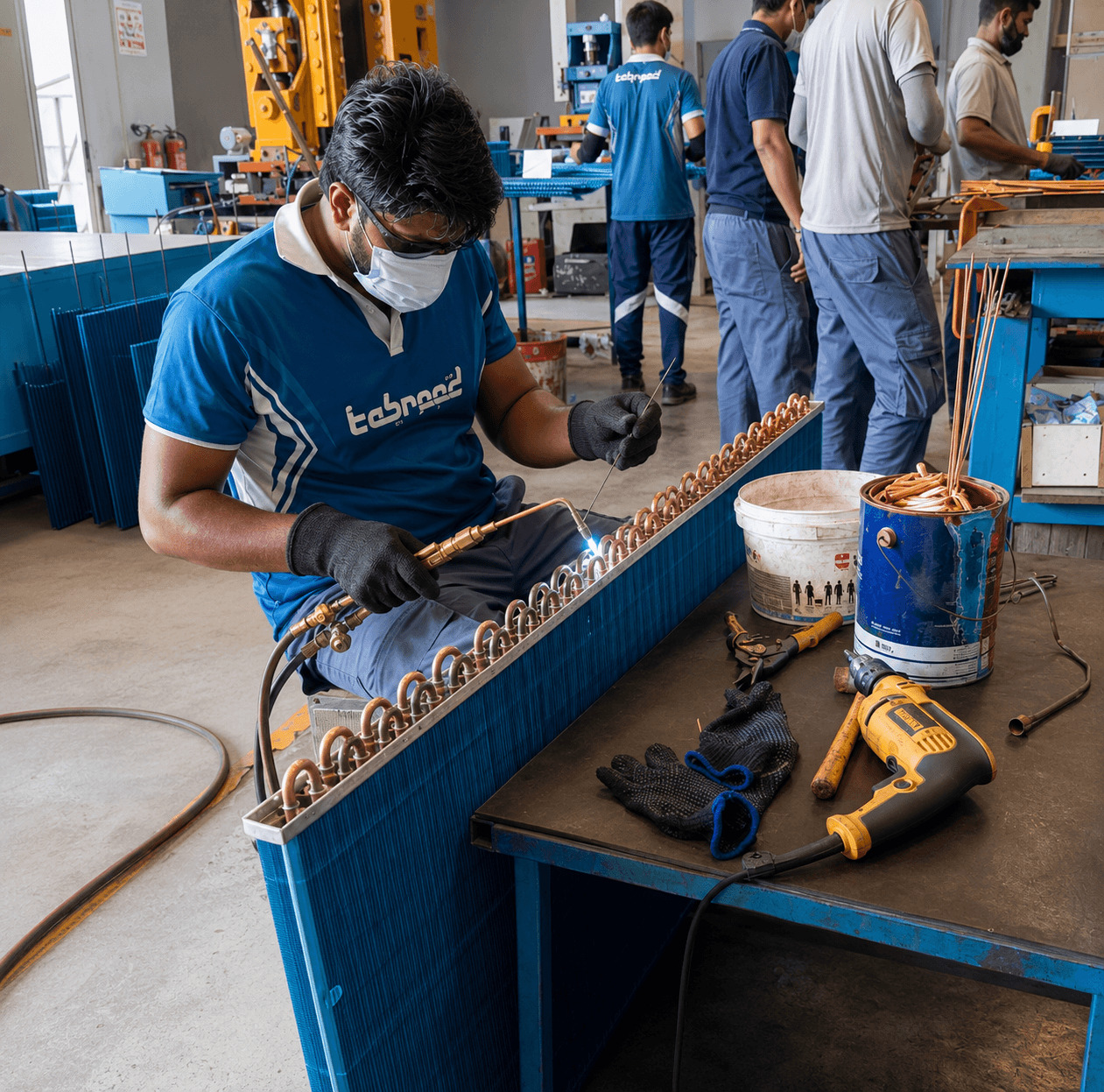
Return bends (U-bends) are then fitted to connect the tube circuits and create a continuous refrigerant flow path. Headers – the inlet and outlet manifolds, are attached at both ends to distribute and collect refrigerant across the circuits.
Every joint at this stage matters. A poor connection doesn’t just leak- it quietly reduces the coil’s efficiency before it ever fully fails.
Step 4: Brazing
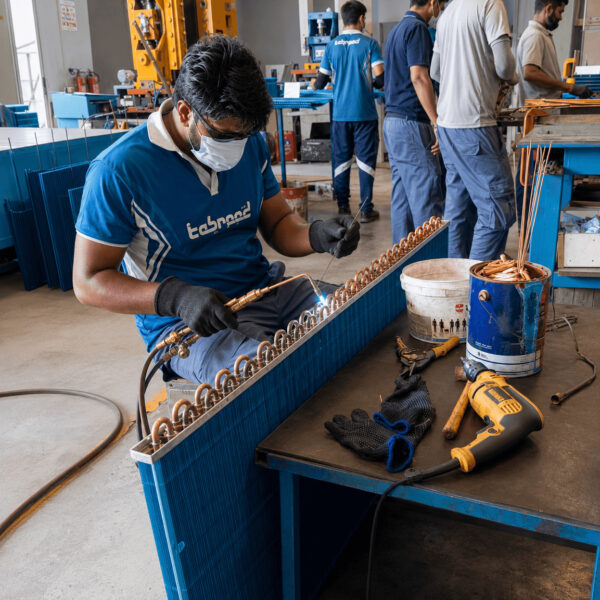
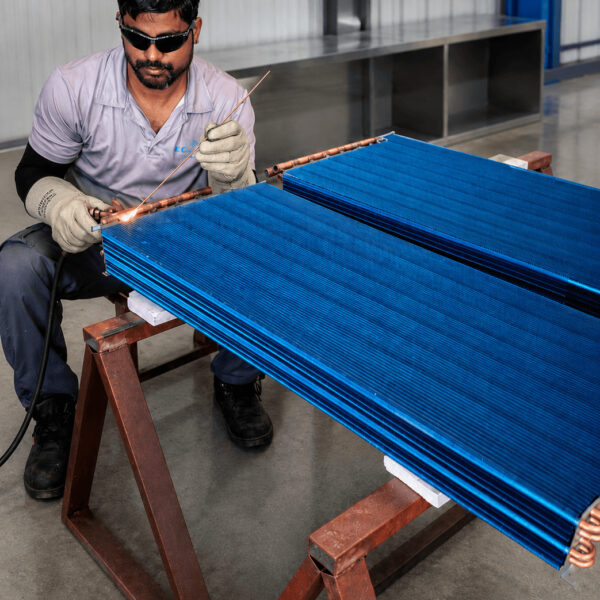
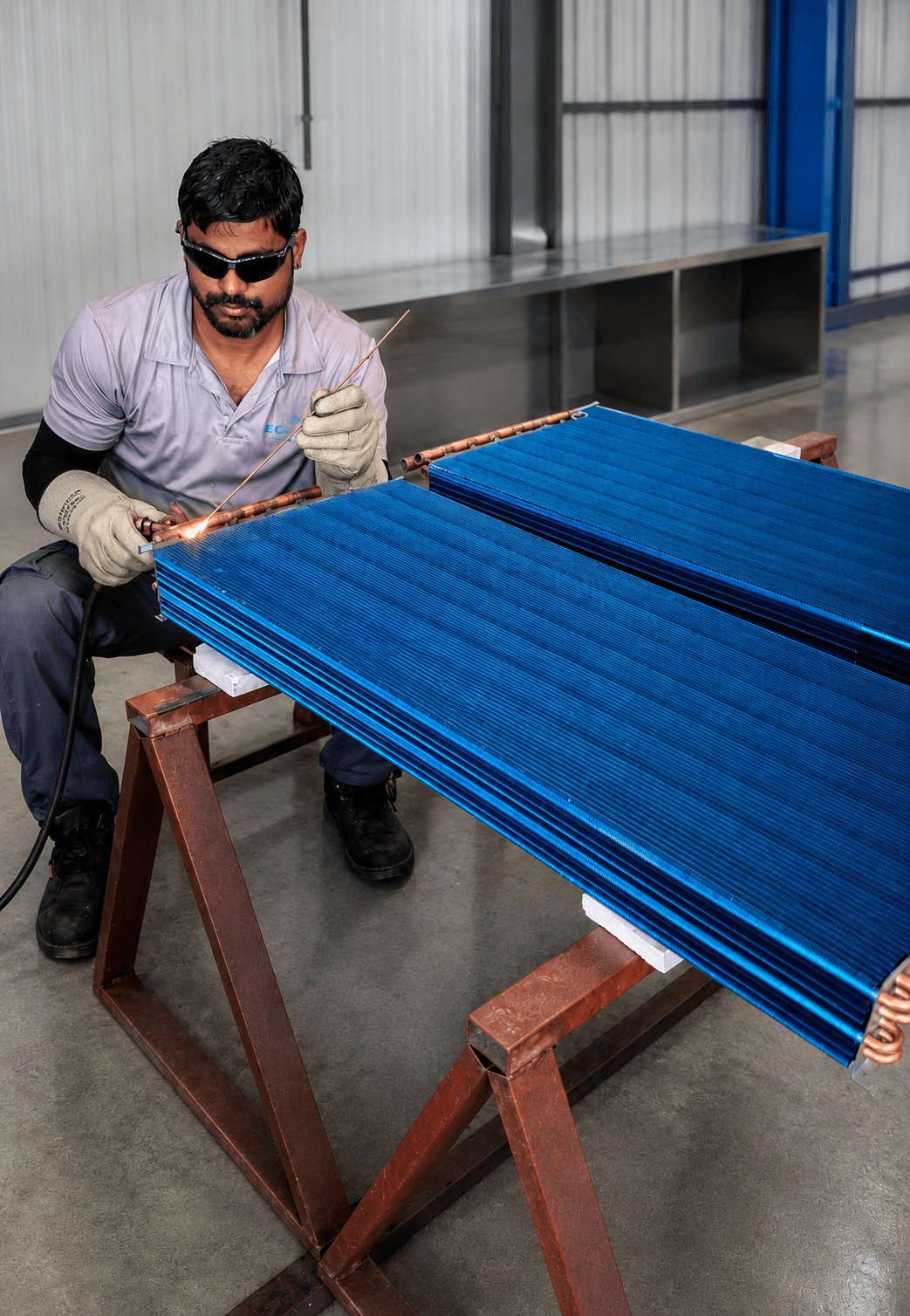
All joints, return bends, and header connections are brazed. This is a high-temperature bonding process using a filler metal to create leak-proof, pressure-resistant seals & it’s one of the most technically demanding parts of condenser coil fabrication.
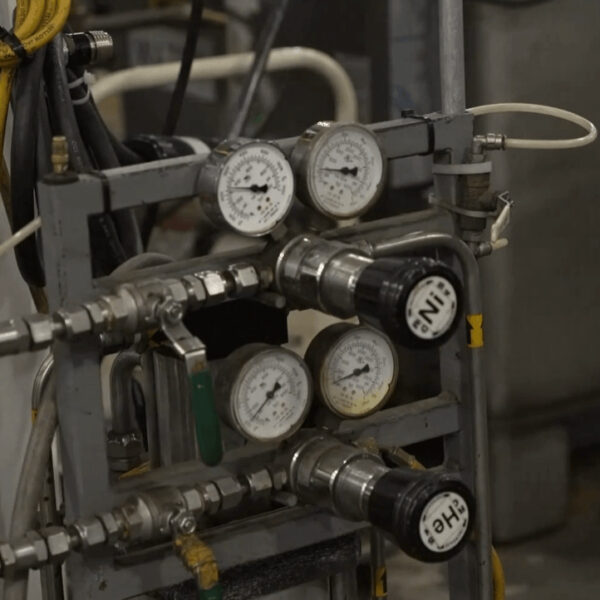
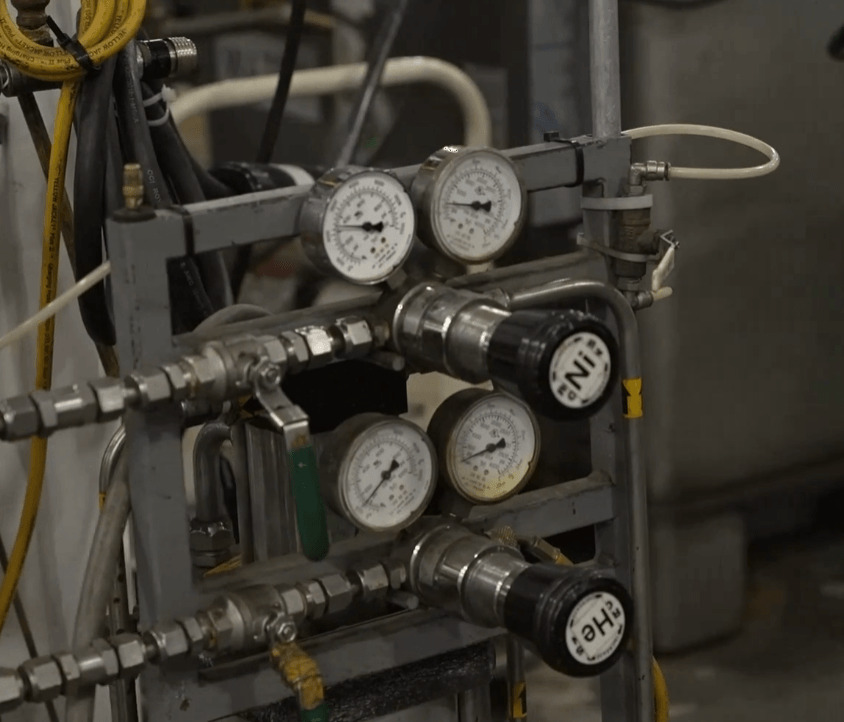
The process must be carefully controlled to prevent oxidation inside the copper tubes. Purging with nitrogen during brazing protects the internal surfaces and keeps the refrigerant circuit clean long-term. Contamination at this stage can cause compressor damage further down the line … a failure mode that’s expensive and difficult to trace back to its source.
Rushed or careless brazing is one of the most common causes of premature coil failure. You can’t see it from the outside, but the system feels it eventually.
Step 5: Pressure and Leak Testing
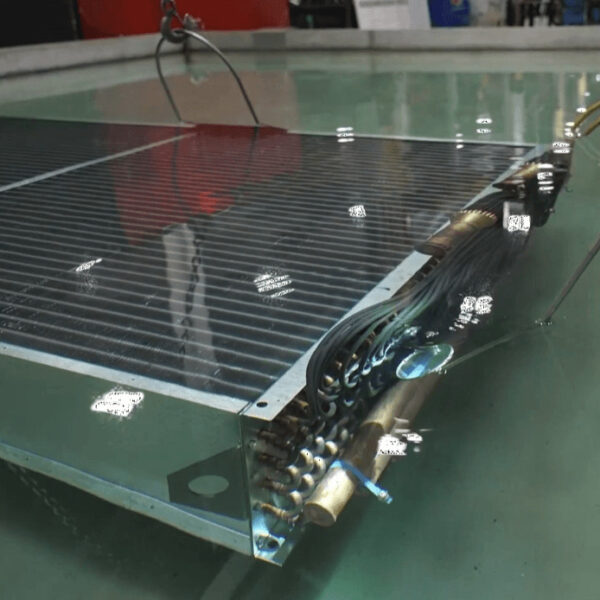
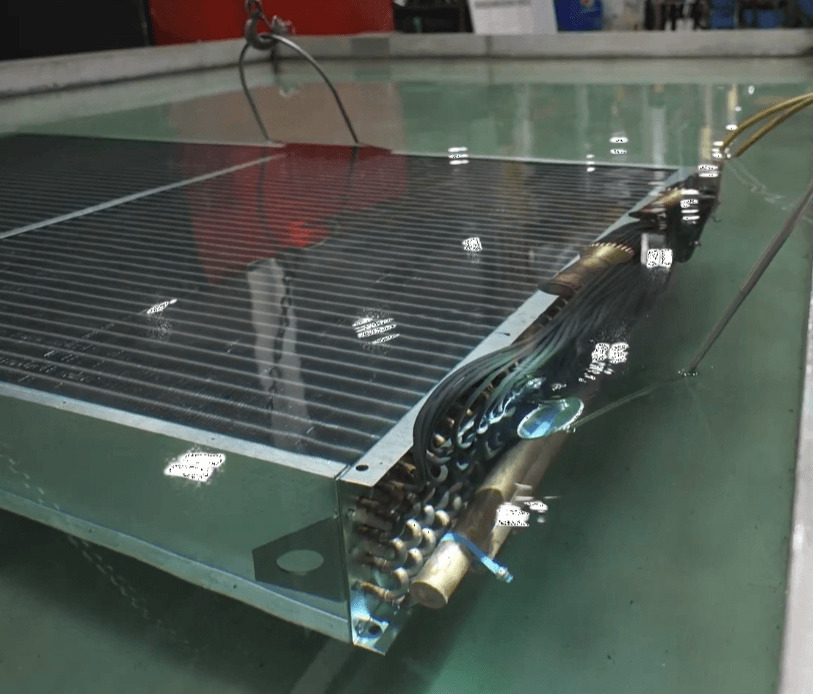
No coil leaves the Al Tabreed facility without being pressure tested. Completed coils are pressurised … typically with dry nitrogen and held at test pressure to check every brazed joint, tube wall, and header connection.
Any pressure drop means a leak. It gets found and fixed before the coil moves forward. This step isn’t optional – a coil with a micro-leak will eventually cause system failure, and that’s a far more expensive problem than catching it at the factory.
Additional checks cover fin condition, coil geometry, and dimensional accuracy against the original design specification.
Step 6: Finishing, Coating, and Inspection
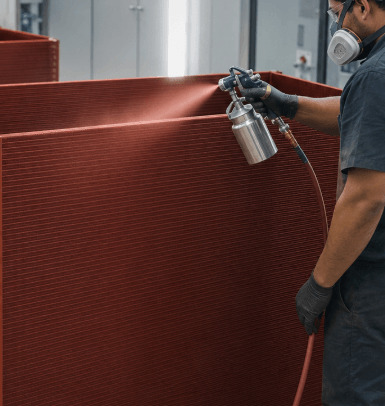
Depending on where the coil will be installed, a protective coating may be applied(epoxy, hydrophilic, or anti-corrosion treatments suited to coastal, industrial, or high-humidity environments).
This is particularly relevant in the UAE. Salt-laden air and extreme heat are constants outdoors. The right coating extends coil life significantly in these conditions. Without it, corrosion – especially on aluminium fins – sets in faster than most operators plan for. All-copper coils in harsh environments offer an inherent advantage here, which is why some clients specify copper fins specifically for outdoor condenser units.
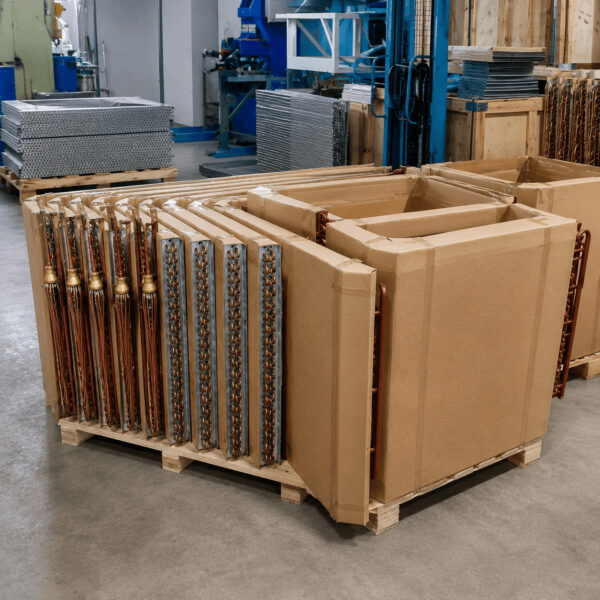
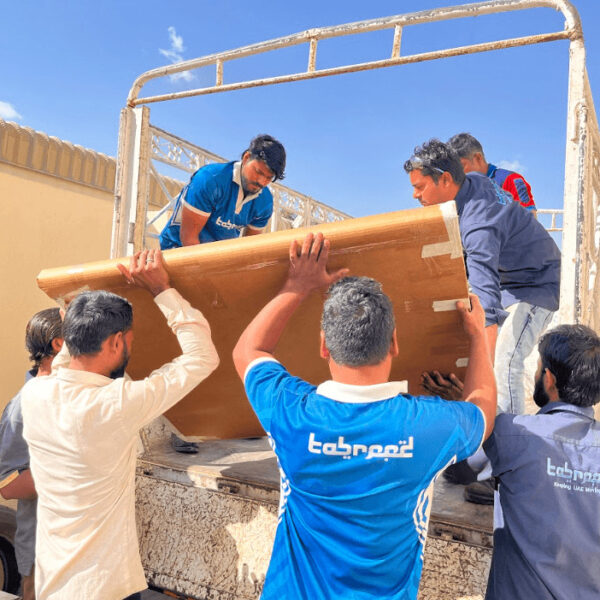
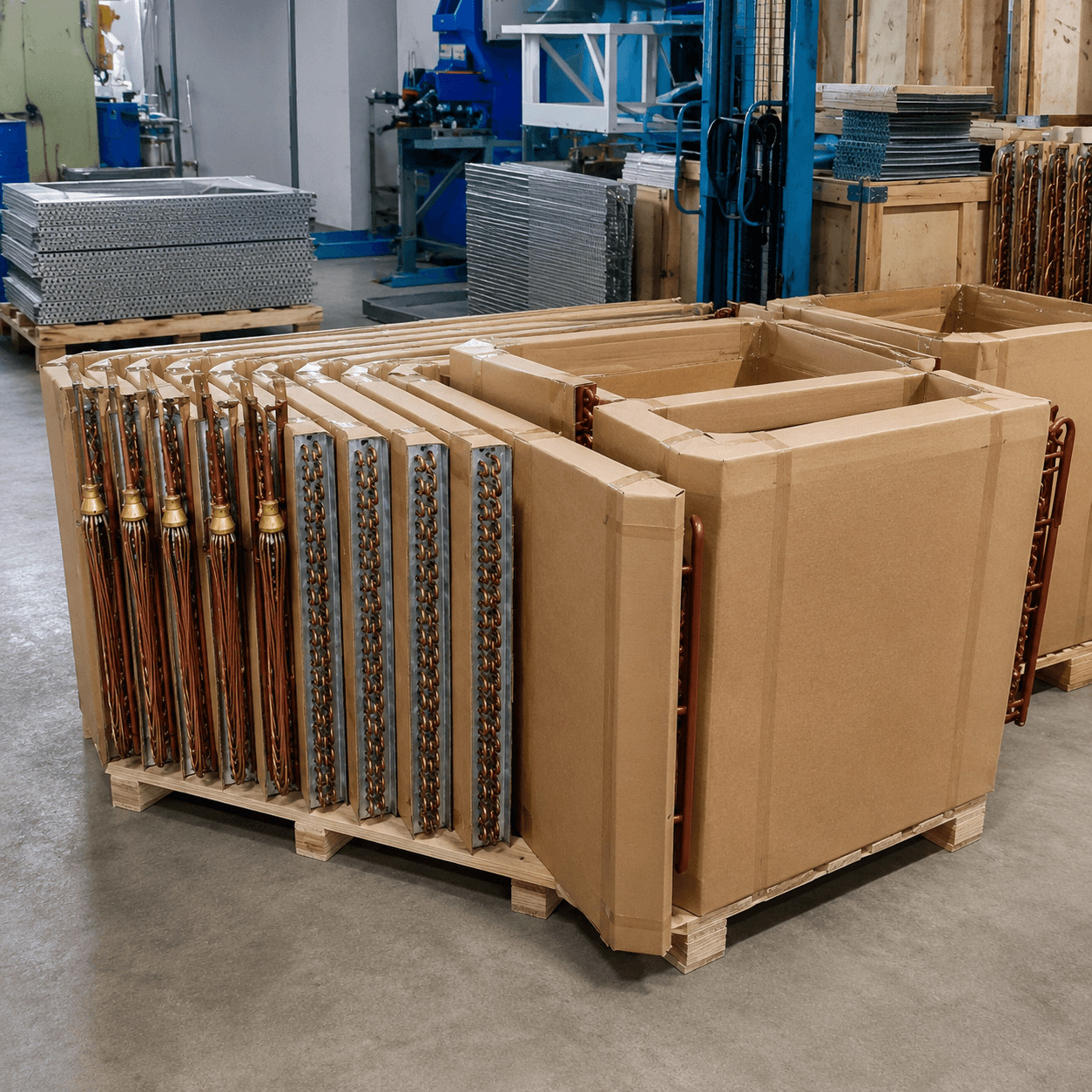
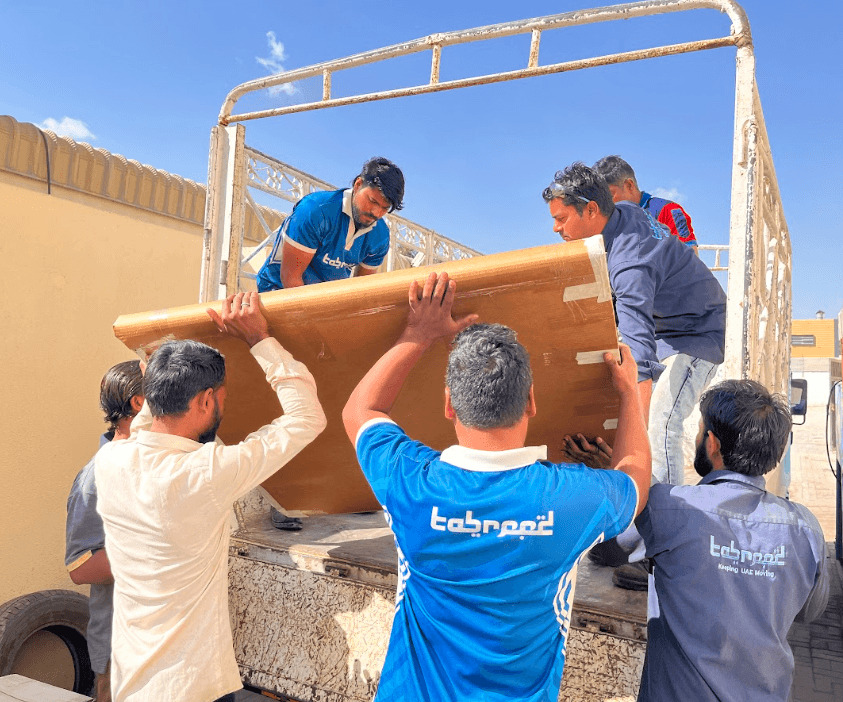
The finished coil is inspected against spec, labelled, and packaged carefully to protect fins during transport and handling.
Why Manufacturing Process Matters for Replacement and Brand-Specific Coils?
For replacement condenser coils, the manufacturing process carries additional responsibility. The coil must match the original system’s specifications closely enough to perform as designed. Dimensional inaccuracy, wrong fin spacing, or incorrect circuit configuration can all cause performance issues even if the coil itself is well made.
The Final Takeaway
Every coil that leaves Al Tabreed has been pressure tested, inspected against specification, and built for the conditions it will actually face, not temperate-climate defaults applied to a Gulf installation. If you’re replacing a coil or specifying one for a new system, talk to our team. We’ll match the spec, confirm the material selection, and tell you exactly what we can deliver.
Al Tabreed brings manufacturing precision and genuine after-sales support to every project. Get in touch with us today or call +971 55 817 1170 to discuss your coil requirements.
Aluminium fins are lighter and more cost-effective, suited to standard indoor HVAC applications. Copper fins offer superior corrosion resistance and longer service life in harsh, coastal, or industrial environments - at a higher material cost.
Ask for pressure test documentation and confirm nitrogen testing was performed before dispatch ... this is standard practice at Al Tabreed for every coil that leaves the facility.
Nitrogen is used during brazing to prevent oxidation inside the copper tubes. Without it, the internal surfaces of the refrigerant circuit can contaminate, leading to compressor damage that's expensive to diagnose and trace back to its source.