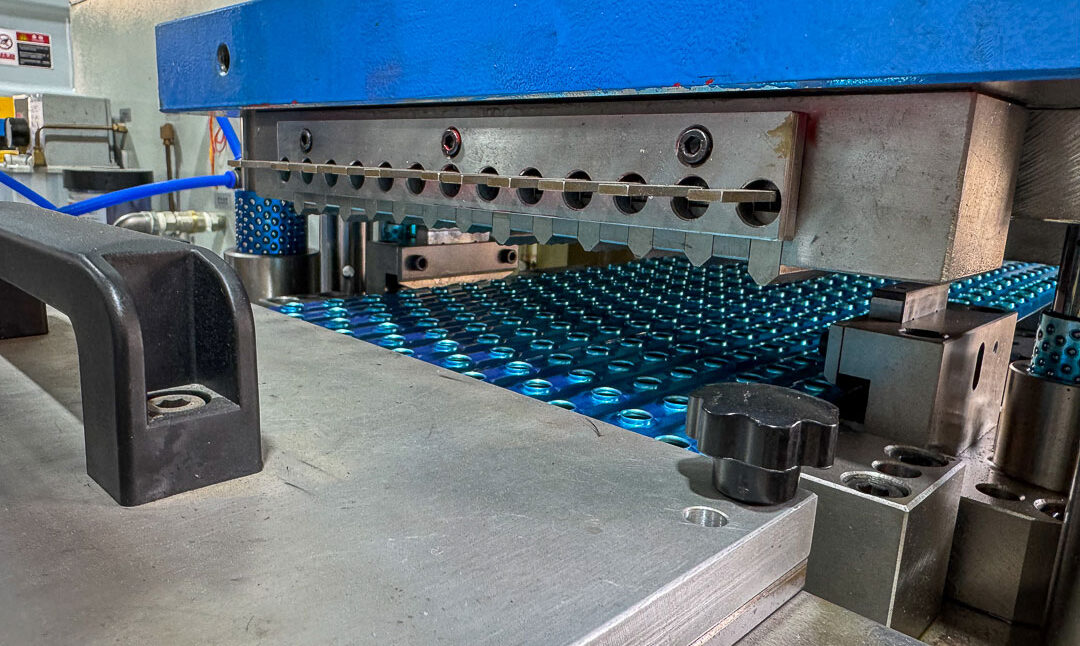
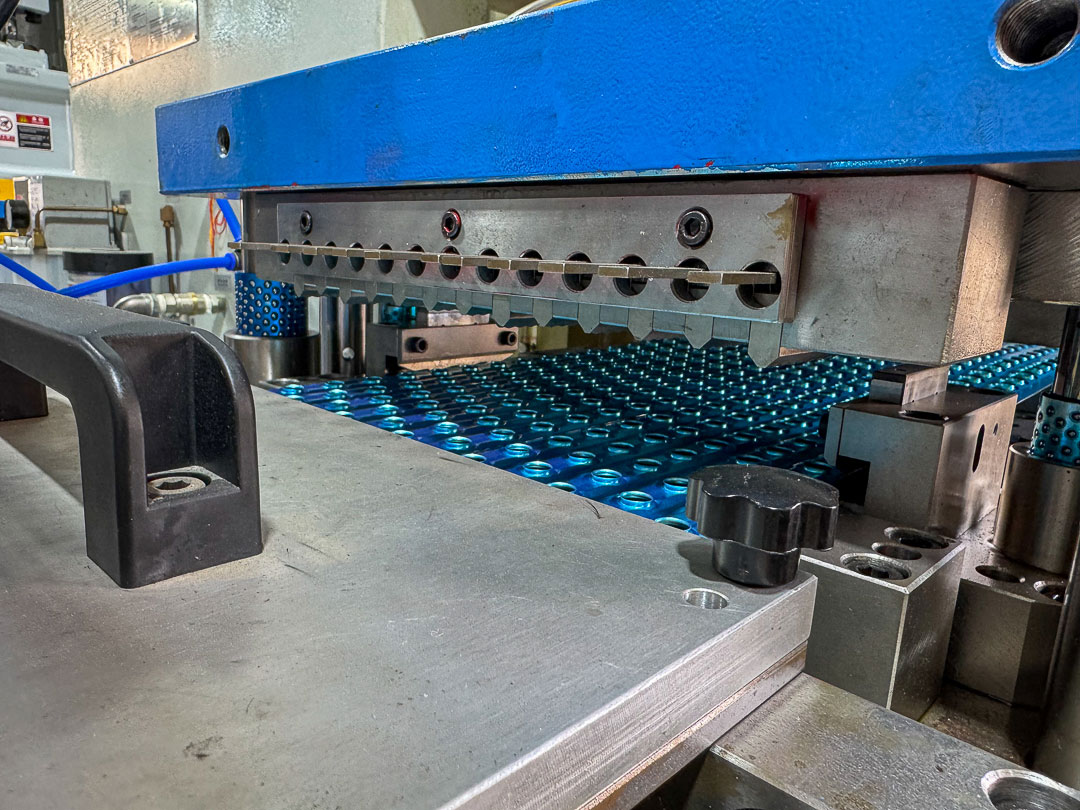
Walk past any condenser coil on a rooftop in Sharjah or Jebel Ali and you will see rows of thin metal fins packed tight against the tube bank… unremarkable to look at, easy to overlook, and yet one of the most decisive design choices in the entire cooling system. Fin geometry does not just change how a coil looks.
It changes how much heat the coil can reject per square metre, how hard the compressor has to work to make up the difference, and how quickly dust and humidity turn a high-performing coil into a liability. For engineers specifying coils in the Gulf, the question of wavy, louvered, or smooth fins is rarely academic.
It is a decision that ripples all the way through to chiller efficiency and operating cost.
What Fin Geometry Actually Does Inside a Coil
A fin exists to solve one problem: air is a poor conductor of heat, and the tube surface alone does not offer enough contact area to move heat quickly between refrigerant and airstream. Fins multiply that surface area many times over. But surface area is only half the story.
The other half is how the air behaves as it crosses the fin..whether it glides past in a smooth, orderly layer or gets disturbed into turbulence that keeps dragging fresh, cooler air into contact with the metal.
This is where geometry starts to matter more than material. Two coils with identical tube spacing and fin count can perform very differently depending on whether the fin surface is flat, wavy, or slotted with louvers.
Smooth Fins – The Reliable Baseline
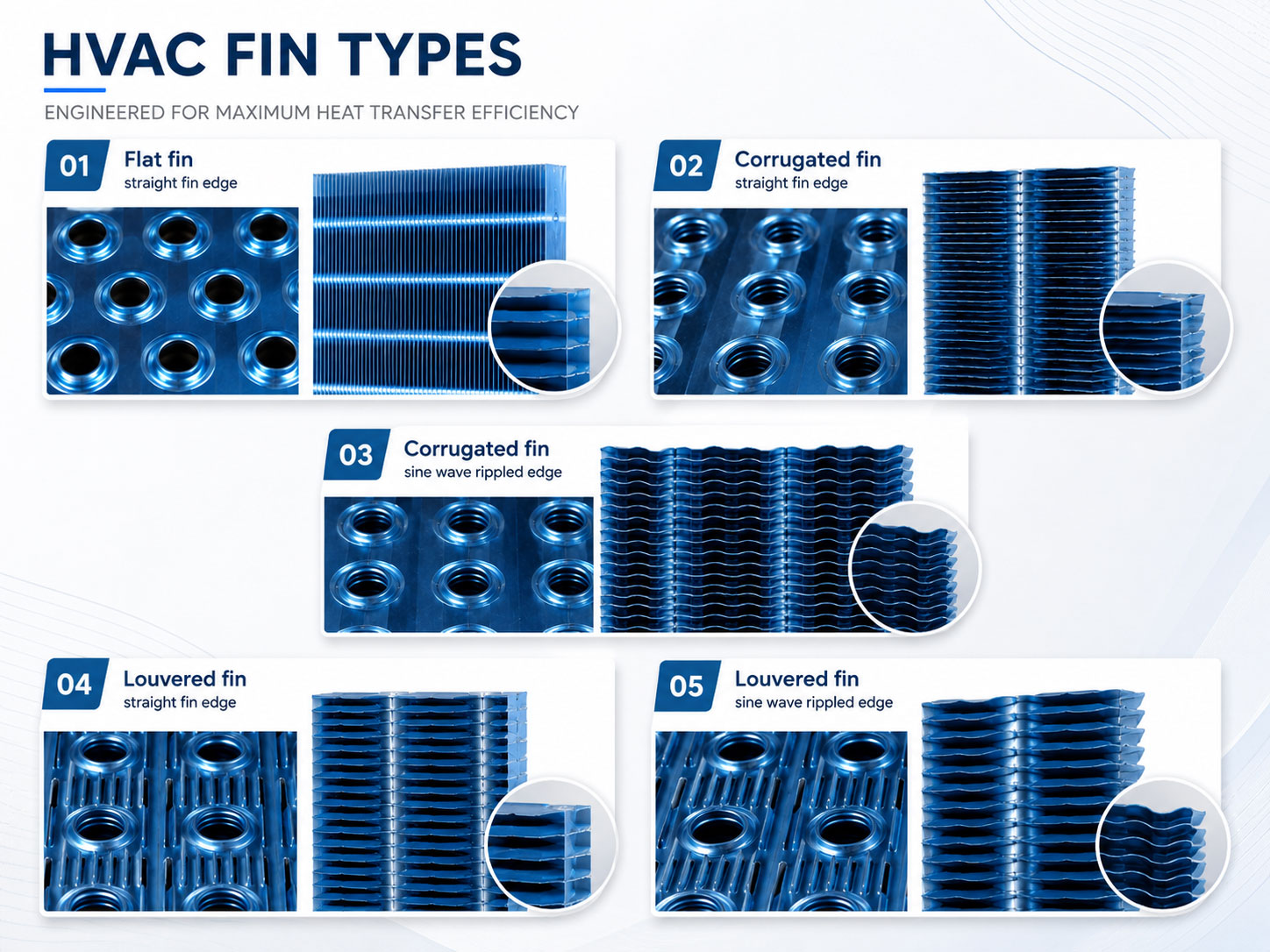
Smooth fins are the simplest form — flat plates with no surface disruption. Airflow across them tends to stay laminar, which keeps a thin, insulating boundary layer of still air clinging to the fin surface. That boundary layer is the enemy of heat transfer; it acts almost like a layer of felt between the metal and the moving air.
Smooth fins are not the most thermally efficient option available, but they earn their place for a different reason: they are far easier to clean, resist fouling better in dusty environments, and tend to hold their performance over years of service with minimal maintenance. In sites where access for cleaning is limited or irregular, that durability can matter more than a few percentage points of peak transfer efficiency.
Wavy Fins: Turbulence Without the Trade-offs
Wavy (or corrugated) fins introduce a sinusoidal ripple along the airflow path. Each ripple forces the air to change direction repeatedly, breaking up that stagnant boundary layer and pulling in fresh air more frequently than a flat surface would allow.
The result is a meaningful step up in heat transfer coefficient compared with smooth fins, generally without a steep rise in pressure drop or a coil geometry that traps debris the way sharper features can. This is arguably why wavy fin patterns have become something of a middle ground in coil manufacturing: a reasonable compromise between the low-maintenance simplicity of smooth fins and the aggressive performance of louvered designs.
Louvered Fins: Maximum Transfer, Maximum Sensitivity
Louvered fins take the turbulence principle further by cutting small angled slats directly into the fin surface. Air is forced through these slats rather than simply across the fin face, generating far more disruption to the boundary layer and, in most published comparisons, the highest heat transfer coefficients of the three designs. The trade-off is real, though. Louver geometry increases air-side pressure drop, which means the fan has to work harder to push the same volume of air through the coil.
Louvered coils reward sites with proactive maintenance schedules; they punish sites that do not clean regularly.
Also Read: How a Condenser Coil Is Manufactured: From Design to Final Testing
From Coil to Compressor: Why Fin Design Reaches the Whole Chiller System
This is where fin design stops being a coil-level detail and starts being a chiller-level one. A more effective fin geometry raises the coil’s heat transfer coefficient, which allows the condenser to reject the same heat load at a lower approach temperature, or reject more heat at the same fan speed. Lower condensing temperature translates directly into reduced compressor lift, which is one of the biggest single drivers of compressor power draw in a vapour-compression cycle.
Conversely, a fin design that fouls quickly or that never had strong turbulence characteristics to begin with forces the coil to run hotter to reject the same load, pushing condensing temperature up, increasing compressor amperage, and eroding the chiller’s overall coefficient of performance. In other words: the fin pattern chosen at the coil level shows up months later on the electricity bill and on the compressor’s service log.
It is one of the clearest examples of how a component-level decision cascades into system-level performance…the same logic that governs how dust and humidity affect coil performance across the region more broadly.
Choosing Fin Design for GCC Conditions
There is no single correct answer here, and it would be dishonest to suggest otherwise. The right fin geometry depends on the balance between three variables that matter differently from site to site: how much heat transfer performance the application genuinely needs, how much pressure drop the fan system can absorb without a redesign, and how realistic the site’s cleaning cadence actually is.
A hospital or data centre chiller running near capacity, with a maintenance contract that includes quarterly coil cleaning, is a strong candidate for louvered fins. A remote industrial site with irregular access and heavy ambient dust may get more consistent long-term performance out of a wavy or even smooth fin pattern that tolerates neglect better than it chases peak efficiency numbers.
Also Read: Air-Cooled vs. Water-Cooled Chillers – What’s Best for UAE Conditions?
Conclusion
Fin design is not cosmetic, and it is not interchangeable. Smooth, wavy, and louvered geometries each shift the balance between thermal performance, airflow resistance, and fouling tolerance in ways that are measurable at the coil and felt at the compressor. Getting that choice right…matched to the site’s actual dust exposure, maintenance access, and load profile, is one of the more overlooked levers for improving chiller efficiency in Gulf conditions.
Al Tabreed Industries engineers and manufactures condenser coils built for the realities of GCC heat, dust, and duty cycles. Get in touch to discuss the right fin geometry for your application.