
In a UAE cooling plant…the heat exchanger rarely gets the attention the chiller does. Yet it quietly decides how hard that chiller has to work.
Every degree of temperature difference lost across a heat exchanger has to be made up somewhere. Usually, that somewhere is the compressor.
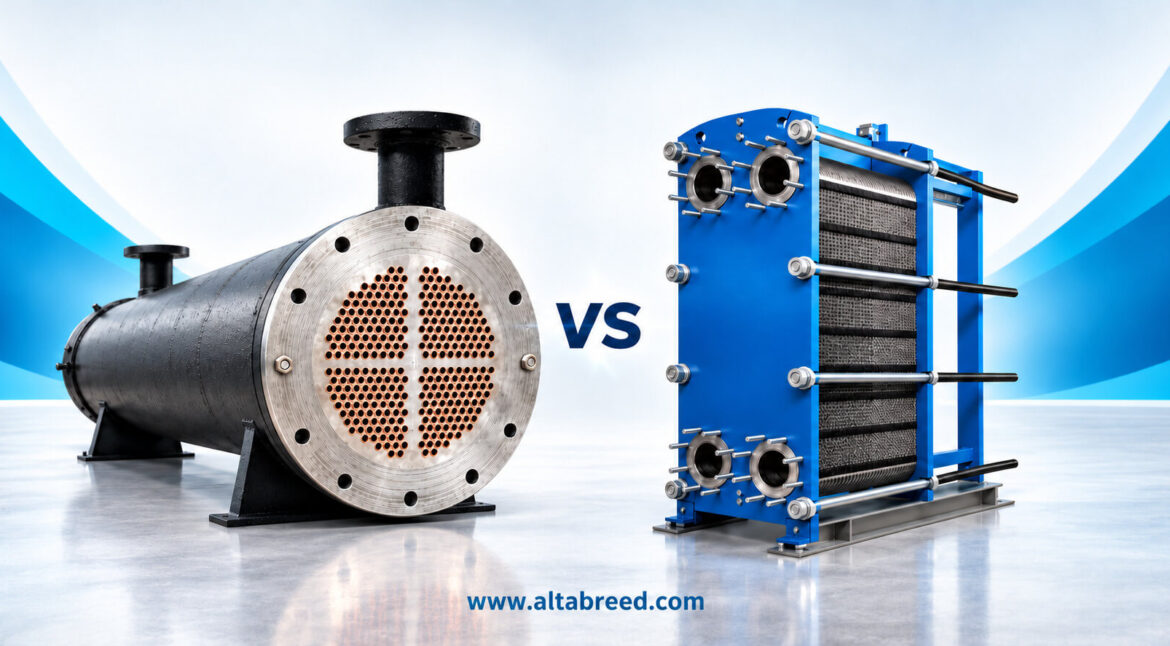
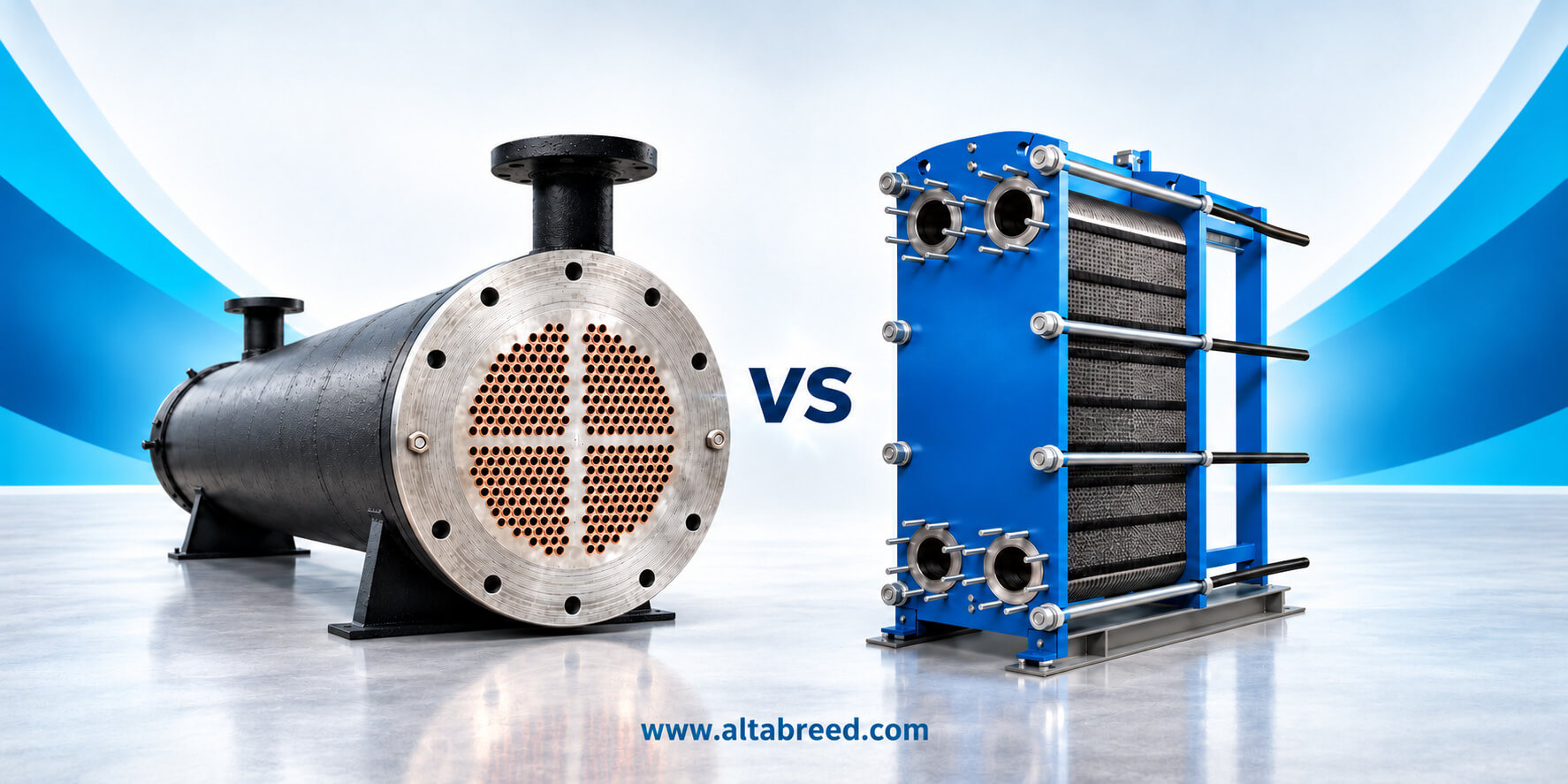
When it comes to choosing between a shell-and-tube vs plate heat exchanger, there’s no universal winner. Both are proven designs. Both are widely used in commercial cooling. But they behave very differently once they’re installed and running in real site conditions.
This guide breaks down how each one works, where each one shines and where each one can cause problems. The goal is simple. Help you pick the right heat exchanger for commercial cooling based on your application, not on habit.
Shell and Tube Heat Exchangers
A shell and tube heat exchanger is built around a bundle of tubes housed inside a cylindrical shell. One fluid flows through the tubes. The other flows around them inside the shell, guided by baffles that keep it moving across the bundle.
Common configurations include U-tube, fixed tube sheet and floating head designs. Each handles thermal expansion and cleaning access a little differently.
Pros
- Rugged construction - Shell and tube units tolerate high pressures, pressure surges and temperature swings well. There are no gaskets between every channel waiting to fail.
- Forgiving with dirty water - Wider flow passages mean condenser water carrying sand, dust or scale is less likely to choke the unit. In the Gulf, that matters.
- Easy tube-side cleaning - Tubes can usually be brushed or rodded out mechanically during shutdowns.
- Long service life - With the right tube material and water treatment, these units can run for many years with minimal intervention.
Cons
- Large footprint - They need more floor space, and extra clearance at one end to pull the tube bundle for maintenance.
- Lower heat transfer efficiency - Flow is less turbulent than in a plate design, so more surface area is needed for the same duty.
- Wider approach temperatures - It's harder to get the two fluids very close in temperature. That gap can push up chiller lift and energy use.
- Hard to expand - If your cooling load grows, you generally can't add capacity to an existing unit. You replace it or add another.
Plate Heat Exchangers (PHE)
A plate heat exchanger uses a stack of thin, corrugated metal plates clamped inside a frame. Hot and cold fluids flow through alternate channels between the plates. In gasketed designs, rubber gaskets seal each channel and direct the flow.
The corrugations are the key. They create strong turbulence, which drives heat across the plates very efficiently.
Pros
- High thermal efficiency - Turbulent flow and thin plates give a much higher heat transfer rate per square metre than a tubular design.
- Close approach temperatures - A PHE can bring the two fluids very close in temperature. On the chiller side, that can mean a lower condensing temperature or a higher evaporating temperature. Both reduce compressor lift and energy use.
- Compact footprint - For the same duty, a PHE typically takes up a fraction of the space of a shell and tube unit. That's a real advantage in crowded UAE plant rooms.
- Expandable - Need more capacity later? In many frames, you can add plates instead of replacing the whole unit.
- Easy inspection - The frame opens, the plates come out and every surface can be inspected and cleaned.
Cons
- Sensitive to fouling - Narrow channels can clog with sand, debris or scale. Open-loop condenser water usually needs good filtration and water treatment upstream.
- Gasket maintenance - Gaskets age, harden and eventually leak. High ambient heat can speed that up. Plan for periodic replacement.
- Higher pressure drop - The turbulence that makes PHEs efficient also increases pumping head. That cost should be checked against the energy saved at the chiller.
- Pressure and temperature limits - Gasketed units have lower operating limits than shell and tube designs, which rules them out for some duties.
Shell and Tube vs Plate Heat Exchanger: Side-by-Side
Here’s how the two designs compare on the factors that matter most in commercial cooling.
Factor | Shell and Tube | Plate (PHE) |
Thermal efficiency | Moderate | High |
Approach temperature | Wider | Very close |
Footprint | Large, plus bundle-pull clearance | Compact |
Tolerance to dirty water | Good | Low, needs filtration |
Pressure and temperature limits | High | Lower in gasketed designs |
Pressure drop | Lower | Higher |
Maintenance | Tube brushing, shell side harder | Open frame, clean plates, replace gaskets |
Capacity expansion | Not practical | Add plates in many frames |
Typical strength | Robust, harsh-water duties | Efficient, space-limited plant rooms |
Conclusion
Shell and tube units are the workhorses. They’re tough, tolerant of poor water and built to last, but they take up space and give away some efficiency.
Plate heat exchangers are the efficiency specialists. They’re compact and run close approach temperatures, but they need clean water and regular gasket care.
In the shell and tube vs plate heat exchanger debate, the better choice is the one that suits your water quality, space, pressure limits and maintenance capability. Get that match right and your chiller will likely run with less lift, less energy and fewer surprises.
Planning a new cooling loop or replacing an ageing unit? Al Tabreed manufactures shell and tube heat exchangers for HVAC and technical cooling in the UAE, and supplies like-for-like plate heat exchanger replacements, plates and gaskets. Get in touch with your duty data and our team will help you find the right fit.