In the GCC, where extreme heat and high salinity challenge industrial cooling, heat exchangers are more than equipment; they are efficiency engines powering oil & gas, desalination, and district cooling systems.
Al Tabreed’s heat exchangers, from finned-tube to shell-and-tube, offer the best thermal efficiency, corrosion resistance, as well as energy savings. Be it large, powering refineries, or chilling district cooling networks, or purifying seawater, the secret lies in smart tube selection and the best designs built for the Gulf’s extremes.
Types of Heat Exchangers
Al Tabreed Industries LLC manufactures and services various heat exchanger types to meet the needs of HVAC, power generation, and industrial processing systems. Each type is engineered for specific thermal performance, flow conditions, and space efficiency.

- Design: Finned tubes transfer heat from fluid to ambient air
- Ideal for: Areas with limited water, energy-efficient cooling
- Features: Copper/Aluminium tubes, round/oval/flat shapes, longitudinal or transverse fins
- Applications: HVAC, industrial air coolers, dryers
Why It Works: High surface area, compact design, energy-efficient, low maintenance
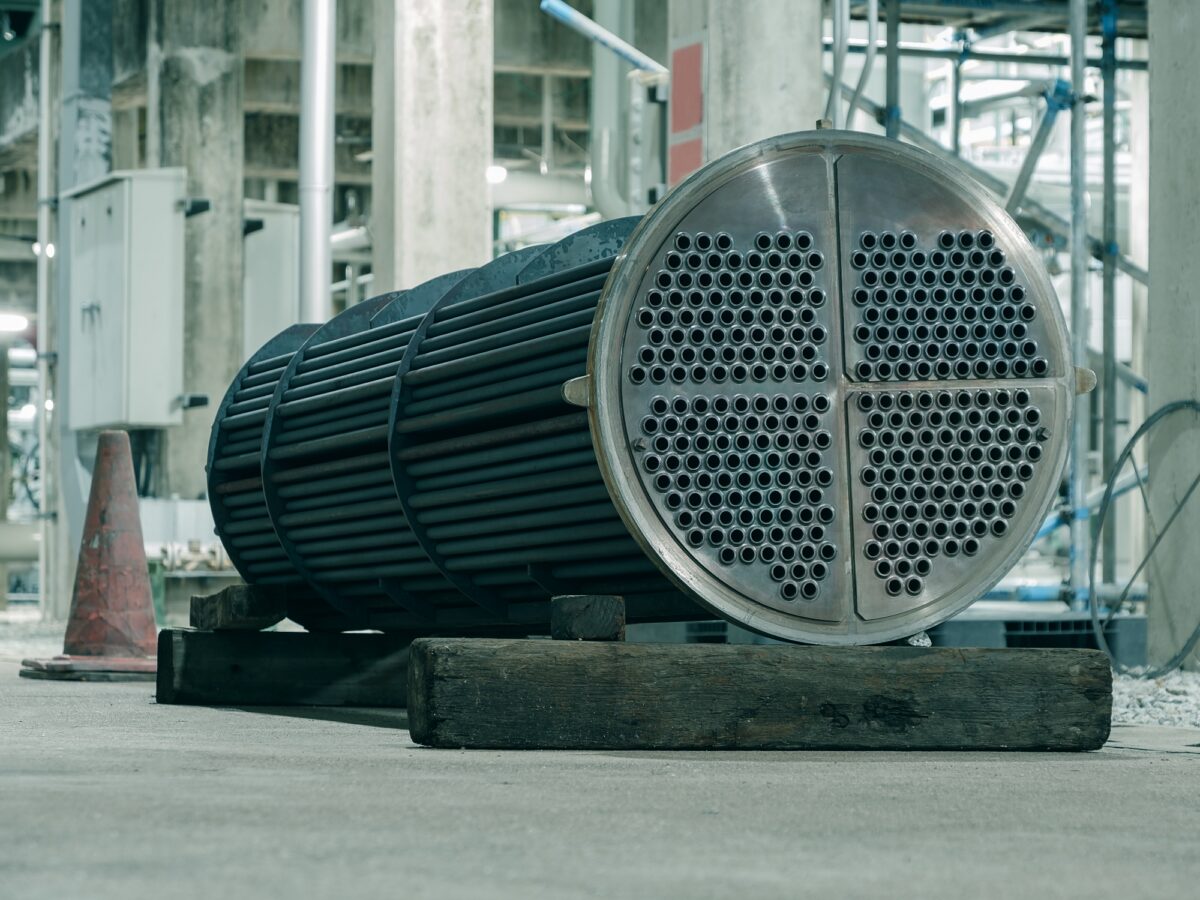
- Design: Tube bundle inside a cylindrical shell
- Ideal for:High-pressure and high-temperature applications
- Features: Stainless steel, copper alloys, carbon steel
- Applications: Oil & Gas, refineries, power generation
Why It Works: Durable, versatile, heavy-duty performance, easy to maintain.

- Design: Stacked corrugated plates maximize heat transfer
- Ideal for: Closed-loop systems and compact installations
- Materials: Stainless Steel
- Applications: Power plants, HVAC, petrochemicals
Why It Works: Compact, easy to clean, high thermal efficiency
How Heat Exchanger Tube Selection Affects Efficiency in the UAE’ Harsh Climate
In the UAE (where ambient temperatures soar & seawater is a common cooling medium)…efficiency of heat exchangers hinges heavily on smart tube selection.
The best tube material and design will offer better heat transfer & also resist corrosion, scaling, and fouling. These are common challenges amplified by the region’s hot, humid, and saline environment.
Choosing tubes with ideal surfaces or internal turbulators can also power up thermal performance without increasing equipment size. This is an utmost vital factor in compact UAE installations. Simply put, in the UAE, efficiency isn’t just about design; it starts with the tube.
Desalination Focus: Titanium’s Rise in the Gulf
Seawater corrosion is a major headache for GCC desalination plants. High salinity and heat quickly wear down standard materials. Titanium shell and tube heat exchangers are changing the game.
-
Strong Against Corrosion
Titanium forms a self-healing oxide layer. It resists chloride attack, pitting, and crevice corrosion. Plants run longer with fewer interruptions. -
Built to Last
While pricier upfront, titanium can last 40+ years. Lower replacements and maintenance make it cost-effective over time. -
Amps Up Efficiency
Thinner, stronger tubes improve heat transfer. Energy use drops without sacrificing performance. -
Eco-Friendly Choice
No metal shedding means cleaner water. Less frequent replacements reduce environmental impact.
Industry-Wise Applications Across the GCC
Heat exchangers are massively major GCC industry, such as oil & gas, power generation, desalination, and HVAC. Their design offers stable performance under high temperature, high pressure, and corrosive conditions. This helps them withstand the Gulf region environment.
-
Oil & Gas
Preheat crude oil before distillation and cool process gases.
Recover waste heat from exhaust streams for better efficiency. -
Petrochemical Plants
Maintain reactor temperatures for safe chemical processing.
Condense vapours and reuse process heat to save energy. -
Power Generation
Used for boiler feedwater heating and steam condensation.
Support turbine and transformer cooling systems. -
Desalination & HVAC
Handle seawater corrosion using titanium tubes.
Offer efficient district cooling and chilled-water systems.
Evolving Role and Future of Shell & Tube Heat Exchangers in the GCC
The GCC is moving fast toward cleaner, smarter industries. As this shift grows, shell and tube heat exchangers are taking on new roles. They now help boost efficiency, cut energy use, and support sustainability goals.
Key Trends Ahead
-
Aftermarket Growth
The need for spare parts and maintenance is rising in the UAE, Oman, and Saudi Arabia. Regular servicing can cut operating costs by up to 30% and extend equipment life. -
Smart Monitoring
IoT sensors now track temperature, pressure, and vibration in real time. This data helps predict failures before they happen, reducing downtime and saving money. -
Advanced Materials
New materials like titanium and duplex steel improve heat transfer and resist corrosion. They are ideal for harsh Gulf environments and seawater cooling systems. -
Energy Efficiency
GCC industries are focusing on green operations. Modern exchangers recover waste heat, lower energy use, and shrink carbon footprints. -
Renewable Adaptation
Shell and tube exchangers now support solar and biomass projects. Their flexible design makes them a key part of the region’s clean-energy future.
Why Al Tabreed Leads in Heat Exchanger Solutions
In the GCC, efficient cooling starts with choosing the right heat exchanger. At Al Tabreed Industries LLC, we specialize in heat exchanger solutions designed to perform in the Gulf’s toughest conditions. Every solution is selected and tailored to meet specific industrial cooling needs, from air-cooled and plate designs to shell-and-tube systems.
Through strategic sourcing, expert customization, and technical support, we ensure solutions that meet diverse industrial and commercial needs. With our engineering expertise and regional insight, Al Tabreed continues to be the trusted partner for high-performance, cost-efficient, and sustainable cooling solutions across the GCC.