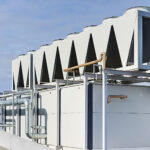
In such a demanding industrial landscape of the United Arab Emirates (UAE), thermal management is no longer just a technical requirement; it has rather become a very critical necessity for operational success.
So, whether you are managing a massive district cooling plant in Dubai or an oil refinery in Abu Dhabi – selecting the right equipment can effectively have an effect on your facility’s energy efficiency and long-term durability.
At Al Tabreed, we specialise in providing world-class, robustly built heat exchange solutions that are always tailored specifically for the toughest working conditions in the region.
One of the most efficient tools in modern thermal management is the Plate Heat Exchanger (PHE) & this guide explains what a PHE is & the specific scenarios where it becomes the superior choice for UAE-based industries.
Understanding the Plate Heat Exchanger (PHE)
A plate heat exchanger is a specialized system that is primarily made to transfer heat between two fluids with high precision, whilst not allowing them to mix. But, unlike the traditional bulky systems, a PHE is constructed using a series of thin, precision-engineered metal plates that are stacked together.
The primary goal of this design is to amp up the surface area available for heat exchange. Within the unit, hot & cold fluids move through alternating channels created by these plates. And this configuration allows for rapid energy exchange and provides operators with accurate temperature control – making sure that your processes remain stable even under heavy thermal loads.
Why Do UAE Conditions Demand High-Performance PHEs?
The UAE presents unique challenges for industrial equipment…ranging from extreme ambient temperatures to highly corrosive coastal environments. Therefore standard equipment can often tend to fail to meet these demands, which is exactly why Al Tabreed focuses on durability and material science.
Our exchangers are engineered to maintain smooth performance and durability even in the toughest working conditions and this is what makes them a “trusted name” for local manufacturing as well as fabrication.
When Should You Use a Plate Heat Exchanger?
Deciding when to implement a PHE over other options – such as shell and tube exchangers—often comes down to efficiency and space. Here are the primary industries and scenarios in the UAE where a PHE is indispensable:
1. High-Efficiency HVAC Systems
In a region where air conditioning is a year-round requirement – maintaining comfortable indoor climates in commercial buildings, hospitals, and industrial facilities is a massive energy drain. PHEs provide an effective solution for transferring heat energy with minimal loss. Their compact design makes them ideal for every type of space-constrained environment, for example: basement plant rooms or rooftops where high performance is mandatory.
2. Oil and Gas Refineries
Refining processes involve harsh conditions that require reliable heat transfer. A PHE should be used in crude distillation, gas cooling, and other essential refinery applications. Al Tabreed’s exchangers are specifically designed to withstand these environments while facilitating efficient energy movement.
3. Petrochemical Processing
Chemical reactions often require stable, high-pressure environments. PHEs are optimized to handle these heavy thermal loads, making sure that chemical production cycles remain efficient and reliable.
4. Food Processing Facilities
For facilities that require strict sanitation standards and rapid temperature adjustments, the PHE is the gold standard. Why? Because they allow for consistent heat transfer in food production without the risk of fluid intermixing.
5. Power Plants
Both conventional and renewable power plants in the UAE use these exchangers to optimize output and maintain stable operations during high-demand summer months.


The Al Tabreed Advantage: Energy Efficiency and Durability
- Superior Thermal Performance: Our exchangers are engineered for high thermal output, which significantly reduces energy costs.
- Space-Saving Configurations: The compact nature of our PHEs allows for easier integration into existing industrial setups.
- Cost-Effectiveness: While high-performing, our units are designed for low maintenance and a long lifespan, resulting in a better Return on Investment (ROI).
- Local Support and Repairs: As a UAE-based leader, we provide complete diagnostic and repair services. We maintain a ready stock of gaskets, plates, and key components compatible with multiple models to minimize your facility's downtime.
Conclusion
Choosing the right partner for your heat exchange needs is as important as the equipment itself. Al Tabreed is recognised among the top heat exchanger manufacturing companies in the UAE because our solutions are customised as per the UAE’s environment & your needs.
To ensure your PHE continues to operate at peak efficiency in the Middle East, regular upkeep is essential. This may include regular cleaning, the inspection of gaskets and seals, and the timely replacement of worn parts. In some cases, chemical cleaning may be necessary to remove tough fouling that can accumulate in high-intensity operations.
If you are looking for robust, customised, and energy-efficient cooling solutions, Al Tabreed is ready to help.