Tube size is one of those decisions that looks simple on the surface … but get it wrong and you’re looking at reduced efficiency, higher energy bills, or a coil that simply doesn’t last in Gulf conditions.
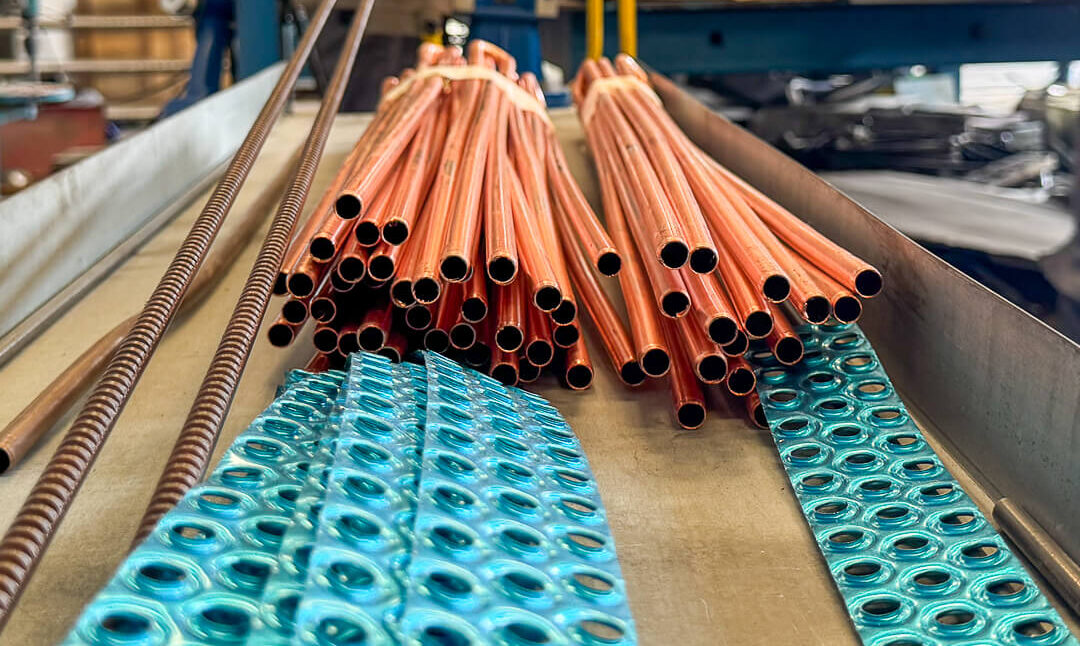
HVAC condenser and evaporator coils are commonly available in tube sizes such as 7 mm, 7.92 mm, 9.52 mm (3/8″), 12.7 mm (1/2″) and 15.875 mm (5/8″).
Each size exists for a reason. Here’s how to think about them.
Why Tube Size Matters?
The tube carries refrigerant. Its diameter affects:
- how much refrigerant the system can move per cycle
- the pressure drop across the coil
- the wall thickness and therefore corrosion resistance
- how compact or bulky the final coil assembly is
- energy consumption over the coil's working life
In a UAE summer, where ambient temperatures regularly exceed 45°C and systems run at full load for months on end – these aren’t minor considerations. The wrong tube size adds stress to the compressor, reduces heat rejection efficiency, and shortens the coil’s service life.
Common Tube Sizes and Where They Are Used
7 mm: Compact, High-Efficiency Applications
The smallest in the range. Used where space is tight and the system capacity is relatively low.
- Residential split AC units
- Small fan coil units (FCU)
- Compact evaporator coils
The advantage of 7 mm tubes is that more of them can be packed into a given coil face area, increasing surface density. This works well for modern inverter AC systems designed for energy efficiency.
In the Gulf context: popular in villa and apartment split systems where indoor unit size is limited and efficiency ratings matter for DEWA or SEWA compliance.
7.92 mm — The Transition Size
Sits between 7 mm and the standard 3/8″. Not as widely specified as the others, but useful when a system needs slightly more refrigerant flow than 7 mm allows … without stepping up to the full 3/8″ diameter.
- Mid-capacity FCU coils
- Replacement coils for specific OEM specifications
- Custom-engineered coils where flow balance is critical
In the Gulf, it is often specified for replacement coils on branded units where the original OEM used this size, and the replacement must match exactly. For replacement projects, tube diameter should be reviewed together with the coil dimensions, fin spacing, number of rows and circuiting, rather than treated as an isolated specification.
9.52 mm (3/8″) — The Industry Workhorse
This is the most common tube size in commercial HVAC globally … and the UAE is no different. The 3/8″ tube hits the sweet spot between refrigerant flow capacity, coil weight, and heat transfer performance.
- AHU coils for commercial buildings
- DX coils for office and retail cooling
- Condenser coils for packaged units
- Mid-range chiller coils
It handles modern refrigerants … R410A, R32, R134a … well, and the tube wall thickness at this diameter provides solid corrosion resistance in most environments.
The default choice for most commercial projects across Dubai, Sharjah, and Abu Dhabi. Hotels, hospitals, malls, schools – the majority of coils running in these buildings are 3/8″.
12.7 mm (1/2″) — Higher Capacity Systems
Step up to 1/2″ when refrigerant mass flow increases … typically in larger cooling systems where 3/8″ would create too much pressure drop across the coil circuit.
- Industrial process cooling coils
- Large-capacity AHU coils
- Chiller evaporator and condenser coils
- Shell and tube heat exchanger configurations
The larger bore reduces velocity inside the tube, which lowers pressure drop and allows the system to move more refrigerant without overworking the compressor.
In the Gulf, it is used heavily in district cooling connections, large industrial facilities, and data centre cooling applications where continuous high-capacity operation is non-negotiable. In a region where power costs are significant and systems run year-round, reducing compressor load matters.
15.875 mm (5/8″) — Heavy Industrial and High-Load Applications
One of the larger tube sizes used in HVAC and industrial cooling applications. Specified for the most demanding applications where flow volume and heat rejection capacity are the primary engineering concern.
- Industrial chillers
- Evaporative condenser coils
- Heavy process cooling systems
- Large shell and tube heat exchangers
The 5/8″ tube also offers the thickest walls relative to bore size … meaning better resistance to corrosion, mechanical damage, and the pressure cycling that comes with industrial operation.
In the Gulf, it is found in desalination support systems, petrochemical facilities, large district cooling plants, and any application where downtime is genuinely not an option. The cost of a coil failure in these environments far exceeds the cost of specifying the right tube size from the start.
Also read : How to Select the Right Condenser Coil for UAE Climate
Conclusion
Tube size selection in the UAE and wider Gulf isn’t just about capacity … It’s also about durability.
The combination of high ambient temperatures, coastal salt air, and near-continuous system operation puts coils under stress that most temperate-climate specifications don’t account for. A tube size that’s marginal in a European context may be genuinely undersized here.
Tube wall thickness, material selection and operating environment also play an important role in durability and corrosion resistance over time. For coastal installations in particular, specifying one size up from the minimum can add years to a coil’s service life.
This is something Al Tabreed‘s technical team considers when reviewing custom and replacement coil requirements.
Frequently Asked Questions
Not without recalculating the refrigerant circuit. Tube size affects flow rate and pressure drop - swapping sizes without engineering review can reduce system efficiency or damage the compressor.
There is no universal standard, although 9.52 mm (3/8″) is commonly encountered in commercial AHU coil designs. The correct tube size depends on the original equipment specification, capacity, fluid or refrigerant circuit and coil design.